Understanding Your Ohio Roof Replacement: A Homeowner’s Guide
Roof replacement in Ohio costs between $12,026 and $19,100 on average, with most installations completed in just one day. Here’s what Ohio homeowners need to know:
| Quick Facts: Roof Replacement Ohio | Details |
|---|---|
| Average Cost | $12,026 – $19,100 |
| Asphalt Shingles | $3.50 – $5.50 per sq ft |
| Metal Roofing | $7.00 – $12.00 per sq ft |
| Typical Timeline | 1-2 days for most homes |
| Return on Investment | 65-70% |
| Home Value Increase | ~$15,000 on average |
| Required Permits | Yes, ~$355.50 total fees |
Your home is your biggest investment, and in Ohio’s challenging climate, your roof works overtime. With harsh winters, spring storms, and summer heat, Ohio roofs face unique challenges that can shorten their lifespan. An estimated 25% of heat is lost through an uninsulated or aging roof, directly impacting your energy bills and comfort.
When considering a roof replacement in Ohio, timing matters. Many contractors offer discounts during off-peak seasons (late fall and winter), though weather conditions may limit installation windows. Most roof replacements take just one day to complete with a properly sized crew.
Whether you’re dealing with storm damage, aging shingles, or planning a home improvement project, understanding the basics of roof replacement will help you make informed decisions and find the right contractor for your needs.
Why replace rather than repair? When your roof shows multiple signs of failure (missing shingles, water stains, sagging areas), has reached the end of its lifespan (15-30 years for asphalt), or has significant storm damage, replacement offers better long-term value than ongoing repairs.

Roof Replacement Ohio Costs & Material Comparisons in 2024
When planning a roof replacement in Ohio, understanding costs and materials helps you make smart choices for your home and budget. Across our state, most homeowners invest between $12,000 and $19,000 for a complete roof replacement, though this number can shift based on your home’s unique features and the materials you select.
As one of our experienced team members often tells customers: “Your home is your biggest investment, and the roof is your first line of defense against Ohio’s unpredictable weather. The right material choice balances what you pay today with the protection you’ll get for decades.”
Let’s look at what goes into these costs and how different roofing materials stack up:
Average Cost of Roof Replacement Ohio
The typical roof replacement in Ohio runs between $12,026 and $19,100 for an average home. This includes everything you need: materials, skilled labor, permits, and hauling away your old roof. Labor typically makes up about 40-50% of your total project cost.
Here’s a straightforward comparison of roofing materials you might consider:
| Roofing Material | Cost Per Square Foot | Average Total Cost | Expected Lifespan | Best For |
|---|---|---|---|---|
| Asphalt Shingles | $3.50 – $5.50 | $12,026 – $19,100 | 15-30 years | Budget-conscious homeowners |
| Metal Roofing | $7.00 – $12.00 | $36,079 – $57,302 | 40-70 years | Long-term investment, energy efficiency |
| Cedar Shake | $10.00 – $16.00 | $36,079 – $57,302 | 20-40 years | Natural aesthetics, historic homes |
| Synthetic Shingles | $6.00 – $9.00 | $21,046 – $33,426 | 30-50 years | Durability with lower maintenance |
| Slate | $15.00 – $30.00 | $54,000 – $108,000 | 75-100+ years | Premium longevity, historic properties |
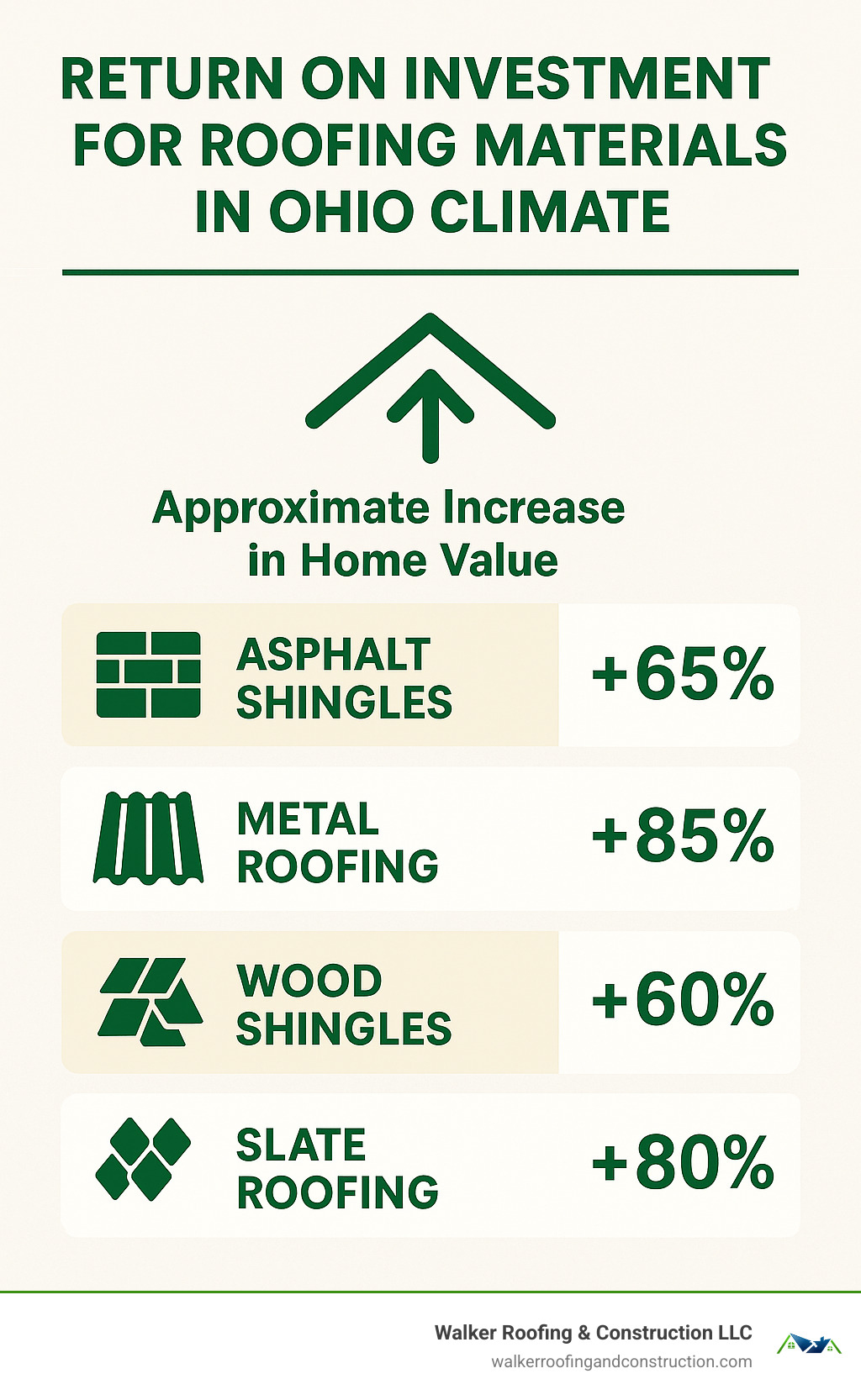
Research from the National Roofing Contractors Association shows that investing in quality materials often pays off through fewer repairs and longer life. Plus, your new roof typically increases your home’s value by around $15,000, giving you a 65-70% return on investment when you sell.
City-Level Pricing Snapshot
Roof replacement costs in Ohio vary depending on where you live. City dwellers often pay a bit more due to higher labor costs and permit fees:
- Columbus: $9,368 – $14,878 (averaging around $12,100)
- Cleveland: $9,272 – $14,727 (averaging around $12,000)
- Cincinnati: Similar to Cleveland pricing
- Suburban and rural areas: Often 10-15% less than major cities
To put this in perspective, if you have a 3,000 square foot house, expect to pay about $18,540 – $29,460 for a complete roof replacement. That’s roughly 7.5% – 11.9% of the median Ohio home value of $159,900.
We’ve noticed that homes in communities like Mentor and Willoughby often have more architectural details than those in rural areas. Those beautiful features add character to your home but can make your roof replacement more complex.
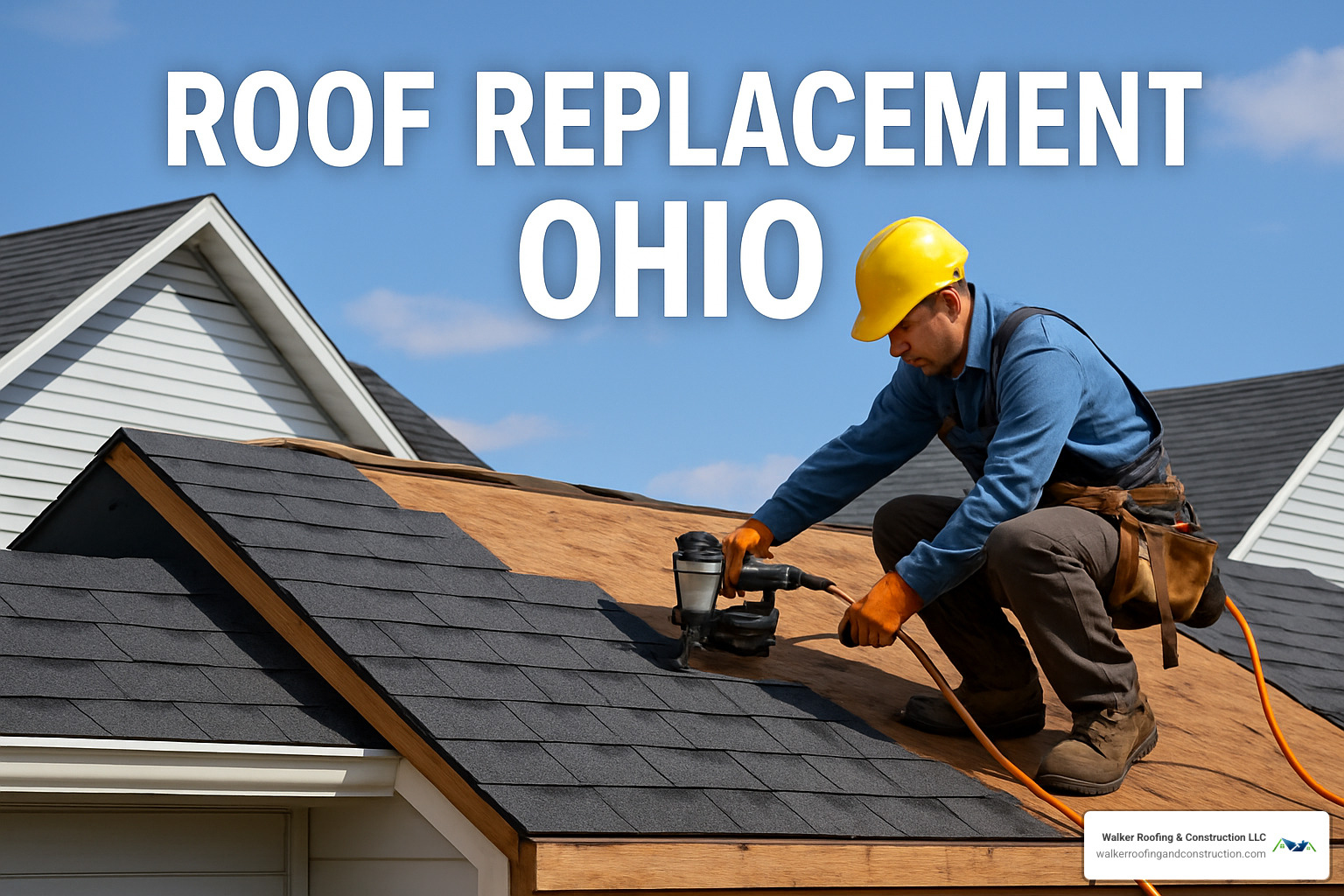
Factors That Move Your Budget
Several key elements can significantly impact your roof replacement costs in Ohio:
Your roof’s size and complexity naturally affects the price – larger roofs need more materials, while multiple peaks, valleys, and steep pitches require more skilled labor time. The number of existing layers matters too, as removing multiple layers of old roofing adds labor and disposal costs (Ohio building codes typically limit homes to two layers maximum).
Hidden damage is another consideration. Until we remove your old roof, we can’t see if there’s damage to the roof deck or structural supports beneath. Smart homeowners budget a cushion for potential repairs. Many of our customers also choose to upgrade ventilation and insulation during replacement, which improves energy efficiency and extends roof life.
Accessories like chimney reflashing, skylight replacement, and new gutters will affect your total cost. Seasonal timing can work in your favor – labor rates may drop during off-peak seasons (late fall and winter), though weather conditions can extend timelines. Finally, roof accessibility matters – difficult access requires additional safety equipment and time.
As one Northeast Ohio homeowner told us: “When we replaced our roof last year, we found rotted plywood under the old shingles. It added about $1,200 to our project, but our contractor explained that replacing it now would prevent much more expensive repairs down the road.”
Saving & Financing Strategies
While a roof replacement in Ohio is a significant investment, you have several ways to manage costs effectively:
Consider scheduling during off-peak seasons when many contractors (including us at Walker Roofing & Construction) offer discounts of 5-10%. Always get multiple quotes from reputable contractors to ensure fair pricing. Many homeowners take advantage of financing options with 0% introductory APR for up to 18 months (for credit scores 580+).
Don’t forget to explore tax credits and rebates – energy-efficient roofing materials may qualify for federal tax credits or utility rebates. If your roof was damaged by a covered event like hail or wind, your homeowner’s insurance may cover replacement costs minus your deductible.
Regular maintenance extends your new roof’s lifespan, maximizing your investment. And remember to balance material quality with budget – higher-quality materials often provide better long-term value despite higher initial costs.
“We recommend setting aside an additional 10% beyond the estimate for unexpected issues,” says our team at Walker Roofing. “It’s better to be prepared and not need it than to be caught off-guard mid-project with no budget for necessary repairs.”
Step-By-Step Roof Replacement Ohio Guide From Inspection to Final Nail
Getting a roof replacement in Ohio doesn’t have to be overwhelming. Understanding what happens from start to finish helps you prepare properly and ensures you get quality results that protect your home for decades to come.
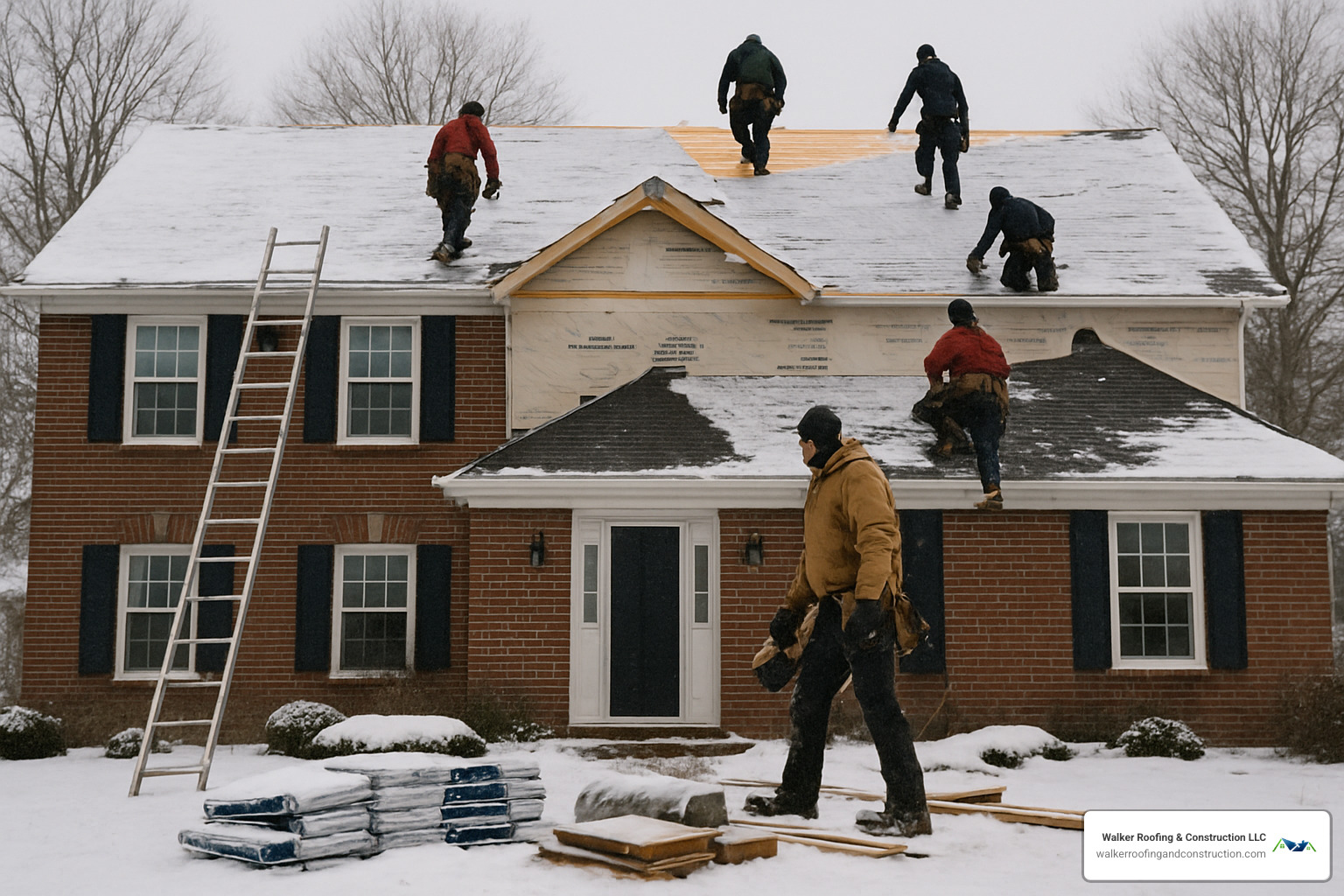
Roof Inspection & Red Flags for Ohio Homes
Your roof talks to you before it fails completely—you just need to know what to listen for. Industry experts recommend checking your roof twice yearly (spring and fall) plus after any major storms.
Is your roof trying to tell you something? Here are the warning signs that indicate you need a roof replacement in Ohio:
Those missing or curling shingles aren’t just an eyesore—they’re your roof’s way of waving a white flag. When you spot dark patches where protective granules have worn away, your shingles are essentially going bald, losing their protective layer.
“In Ohio’s harsh climate, we often see premature aging due to our freeze-thaw cycles,” explains a certified inspector. “What might last 25 years elsewhere often needs replacement after 15-20 years here.”
Pay attention to your ceilings too. Water stains or leaks inside your home are never normal. And if you venture into your attic and see daylight peeking through boards, you’ve got serious problems.
One Mentor homeowner learned this lesson the hard way: “We ignored some dark stains on our ceiling for months. By the time we called for an inspection, water had damaged our insulation and created a mold problem. Those small signs were actually big red flags.”
Moss growth might look charming on a cottage in a fairy tale, but on your roof, it’s trouble. And those ice dams that form along your eaves in winter? They’re not just pretty icicles—they’re forcing water under your shingles.
Permits, Codes & Scheduling
Before the first shingle comes off, you’ll need to handle the paperwork for your roof replacement in Ohio. While requirements vary slightly by city, most follow a similar pattern.
Expect to pay around $355.50 total for permits, which typically breaks down to a $275 processing fee, $10.50 per 100 square feet, a $65 certificate of occupancy fee, and a $5 Ohio Board of Building Standards fee. These permits ensure your project meets Section 1507 of the Ohio Building Code.
“While most roof replacements in Ohio take just one day to complete, the permitting process can take 1-2 weeks,” notes a local contractor. “Plan accordingly, especially if you’re working against a deadline like a home sale.”
Timing matters too. Late spring through early fall offers the most reliable weather windows, but you’ll compete with every other homeowner for contractor availability. Consider scheduling during off-peak seasons for potential discounts—many quality roofers can safely install even in winter when weather permits.
Need permits faster? Some jurisdictions offer a walk-in plan review option for an additional fee. It’s worth considering when timing is critical, especially for storm damage repairs.
Choosing a Contractor & Labor Impact
Selecting the right contractor for your roof replacement in Ohio might be the most important decision you make. After all, even the best materials won’t perform properly if installed incorrectly.
Look for credentials that matter: a valid Ohio contractor’s license, proper insurance coverage, manufacturer certifications like CertainTeed Master Shingle Installer, and a BBB A+ rating. A local presence with at least 5-10 years in business tells you they’ll be around if you need them later.
Labor typically accounts for 40-50% of your total costs. This isn’t where you want to cut corners. Experienced, certified installers not only work more efficiently but often provide access to better manufacturer warranties.
“A quality contractor should walk you through their installation process, explain material options clearly, and provide a detailed written estimate,” advises a roofing industry veteran. “They should also be willing to show you examples of their previous work in your area.”
Watch for red flags like significantly lower bids (corners are being cut somewhere), demands for large upfront payments (more than 30% is unusual), or pressure tactics with “today only” pricing. A reputable contractor won’t need to rush your decision.
A Painesville homeowner shared: “We chose our contractor based on their certifications and local reputation. They weren’t the cheapest, but their crew finished our complex roof in a single day, and five years later, we haven’t had a single issue.”
Installation Day & Add-Ons
When the big day arrives for your roof replacement in Ohio, the change happens faster than you might expect.
Your morning starts early—crews typically arrive between 7-8 AM. They’ll begin by protecting your property with tarps and barriers, positioning a dumpster, and staging materials. The tear-off process is messy but efficient as they remove all existing roofing materials and inspect the exposed decking for damage.
Then the rebuild begins. First comes the ice and water shield along eaves and valleys, followed by synthetic underlayment over the entire roof. Drip edge goes around the perimeter, with proper flashing around all penetrations. Finally, your new shingles go on according to manufacturer specifications, topped off with ridge vents or other ventilation systems.
“Most residential roof replacements in Ohio take just one day with a properly sized crew,” explains a roofing project manager. “Larger or more complex roofs might take two days, but we rarely need more time unless we encounter significant structural issues.”

While your roof is exposed, consider valuable add-ons: upgraded ventilation systems to extend roof life, improved underlayment for extra protection against ice dams, or a chimney cricket to prevent water pooling. Many homeowners coordinate gutter replacement or install gutter guards at the same time, and replacing an aging skylight is much more economical during a roof replacement than as a standalone project.
One Cleveland homeowner was impressed with the efficiency: “They arrived at 7:30 AM, and by 5 PM, I had a completely new roof. They even used a magnetic roller to pick up nails from my lawn and driveway. I was amazed at how smooth the whole process was.”
Insurance Claims After Storm Damage
Ohio’s weather can be tough on roofs. Hail, high winds, and heavy snow frequently cause damage that may qualify for insurance coverage under your homeowner’s policy.
If your roof suffers storm damage, take immediate action. Document everything with photos and videos before applying temporary protection if needed. Contact your insurance company promptly to report the claim, and schedule a professional roof inspection from a contractor experienced with insurance work.
The insurance adjuster’s visit is crucial. Be present during their inspection, and if possible, have your roofing contractor there too. They can help identify damage the adjuster might miss and explain technical issues. Understand the difference between Actual Cash Value (ACV) and Replacement Cost Value (RCV) coverage—it significantly affects your out-of-pocket costs.
“Having a knowledgeable contractor who understands insurance claims can make a significant difference,” notes an insurance specialist. “They can help identify all damage and ensure nothing is overlooked during the adjuster’s inspection.”
Once approved, your insurance company typically issues an initial payment minus your deductible. Your contractor orders materials and schedules the work. After completion, they provide documentation to your insurance company, which then releases the final depreciation payment (for RCV policies).
A Willoughby homeowner’s experience highlights the importance of expert help: “After a severe hailstorm, our insurance initially denied our claim. Our contractor met with the adjuster for a re-inspection, pointed out damage the adjuster had missed, and our claim was approved. Without their expertise, we would have paid out of pocket for a new roof.”
Understanding the FEMA flood map requirements can also help when dealing with water-related claims and ensuring proper gutter drainage systems are installed during your roof replacement.
Conclusion & Next Steps
Investing in a roof replacement in Ohio isn’t just about fixing a problem—it’s about protecting your family, boosting your home’s value, and creating peace of mind for years to come. With a new roof adding approximately $15,000 to your home’s value, it’s an investment that makes financial sense while providing immediate benefits you’ll notice every day.

Throughout this guide, we’ve walked through the entire process—from inspection to material selection, finding the right contractor, and even navigating insurance claims. While the typical roof replacement in Ohio costs between $12,026 and $19,100, making informed choices helps you maximize every dollar spent.
As you consider your next steps, keep these essential points in mind:
Regular inspections are your best friend. Taking just an hour twice a year to check your roof can catch small issues before they become budget-busting emergencies. Many homeowners mark their calendars for spring and fall inspections to stay ahead of potential problems.
Quality matters—in both materials and workmanship. As one Cleveland homeowner told us, “I saved about $2,000 going with a lower-bid contractor five years ago, but I’m already facing repairs. My neighbor’s roof from a certified installer still looks brand new.” The right installation team makes all the difference in how your investment performs over time.
Give yourself breathing room in your timeline. Between permit processing, material ordering, and Ohio’s unpredictable weather, rushing a roof replacement often leads to stress and compromises. Most homeowners find planning at least 3-4 weeks ahead provides the smoothest experience.
Documentation is your protection. Keep digital and physical copies of all warranties, permits, contracts, and communication with your contractor. These records prove invaluable if you ever sell your home or need to file a warranty claim.
When you’re ready to move forward with your roof replacement in Ohio, Walker Roofing & Construction LLC offers personalized guidance through every step. With over two decades serving Northeast Ohio communities including Mentor, Painesville, and Willoughby, their team brings both expertise and local understanding to your project.
Their CertainTeed Master Shingle Installer certification ensures proper installation techniques, while their 10-year workmanship guarantee provides lasting peace of mind. For homeowners dealing with storm damage, their insurance specialists help steer the claims process, often securing approvals where other contractors see denials.
For more information about their roof replacement services or to schedule a free, no-obligation inspection, visit their website today.
Your roof silently protects everything that matters most—your family, your belongings, and the memories you create under it. Making thoughtful decisions about its replacement ensures that protection continues faithfully for decades to come, through every season Ohio throws your way.