Why Understanding Your Roof Estimate Process Matters
A roof estimate is a detailed breakdown of costs for your roofing project, including materials, labor, permits, and additional services like tear-off and disposal. Here’s what every homeowner needs to know:
Key Components of a Roof Estimate:
– Materials – Shingles, underlayment, flashing, ventilation
– Labor costs – Installation, supervision, cleanup
– Tear-off & disposal – Removing old roofing, dumpster fees
– Permits & inspections – Local building code compliance
– Timeline – Project start and completion dates
– Warranty terms – Material and workmanship coverage
Getting an accurate roof estimate isn’t just about budgeting – it’s about protecting one of your largest investments. The average asphalt roof replacement costs $7,662 nationwide, but prices can vary by thousands of dollars between contractors and regions.
For Northeast Ohio homeowners, understanding the estimate process helps you steer insurance claims, compare contractor quotes fairly, and avoid costly surprises. Whether you’re dealing with storm damage or planning a proactive replacement, knowing what goes into your estimate puts you in control.

Why an Accurate Roof Estimate Matters
Your roof represents 15-20% of your home’s total value, making it one of the most significant investments you’ll make as a homeowner. An accurate roof estimate protects this investment in several critical ways:
Financial Protection: Roofing costs can range from $4,190 to $15,000 for a typical home. Without proper estimates, homeowners often face budget overruns that strain finances or force compromises on quality.
Resale Value Impact: A new roof can increase home value by $12,000-15,000 on average. However, poor workmanship can actually decrease value. Accurate estimates help you choose quality contractors and materials.
Insurance Compliance: Many insurance policies require professional estimates for claims processing. In Northeast Ohio, where severe weather is common, having proper documentation can mean the difference between full coverage and costly out-of-pocket expenses.
Roof Estimate Fundamentals: Key Factors That Drive Costs
90% of roofing contractors underbid their jobs because they don’t properly account for overhead and time costs. Understanding what drives roofing costs helps you spot these red flags and make smart decisions.
Your roof’s size forms the foundation of every estimate. Roofers measure in “squares” – each square equals 100 square feet of roof surface. A typical 1,600 square foot ranch might actually have 18-20 squares when you factor in pitch and overhangs.
Roof pitch makes a huge difference in both materials and labor costs. A gentle 4:12 pitch roof is straightforward to work on, but a steep 9:12 pitch requires special safety equipment and slows down the crew significantly.
Complex roof designs cost more. A basic gable roof installs quickly, but add dormers, multiple roof planes, and skylights, and you’ve created a puzzle that takes longer to solve.
What’s Inside a Professional Roof Estimate
A professional roof estimate should specify exactly what you’re getting. Good estimates name specific products like “Owens Corning Duration shingles” rather than vague terms like “quality shingles.”
Labor breakdown should separate different types of work. Professional contractors typically charge $3-5 per square foot for labor, varying based on complexity and regional wage rates.
Warranty coverage needs clear explanation. Walker Roofing & Construction LLC provides a 10-year workmanship guarantee – significantly longer than the industry standard of 1-2 years.
Roofing Materials and Their Price Impact
Asphalt shingles balance cost and performance. Basic three-tab shingles cost $3.20-3.40 per square foot installed, while architectural shingles run $4-6 per square foot. They last 15-30 years with proper installation.
Metal roofing costs $8-15 per square foot but can last 40-70 years. Metal roofs reflect solar heat, potentially reducing cooling costs by 10-25%.
Labor, Overhead & Permit Fees Explained
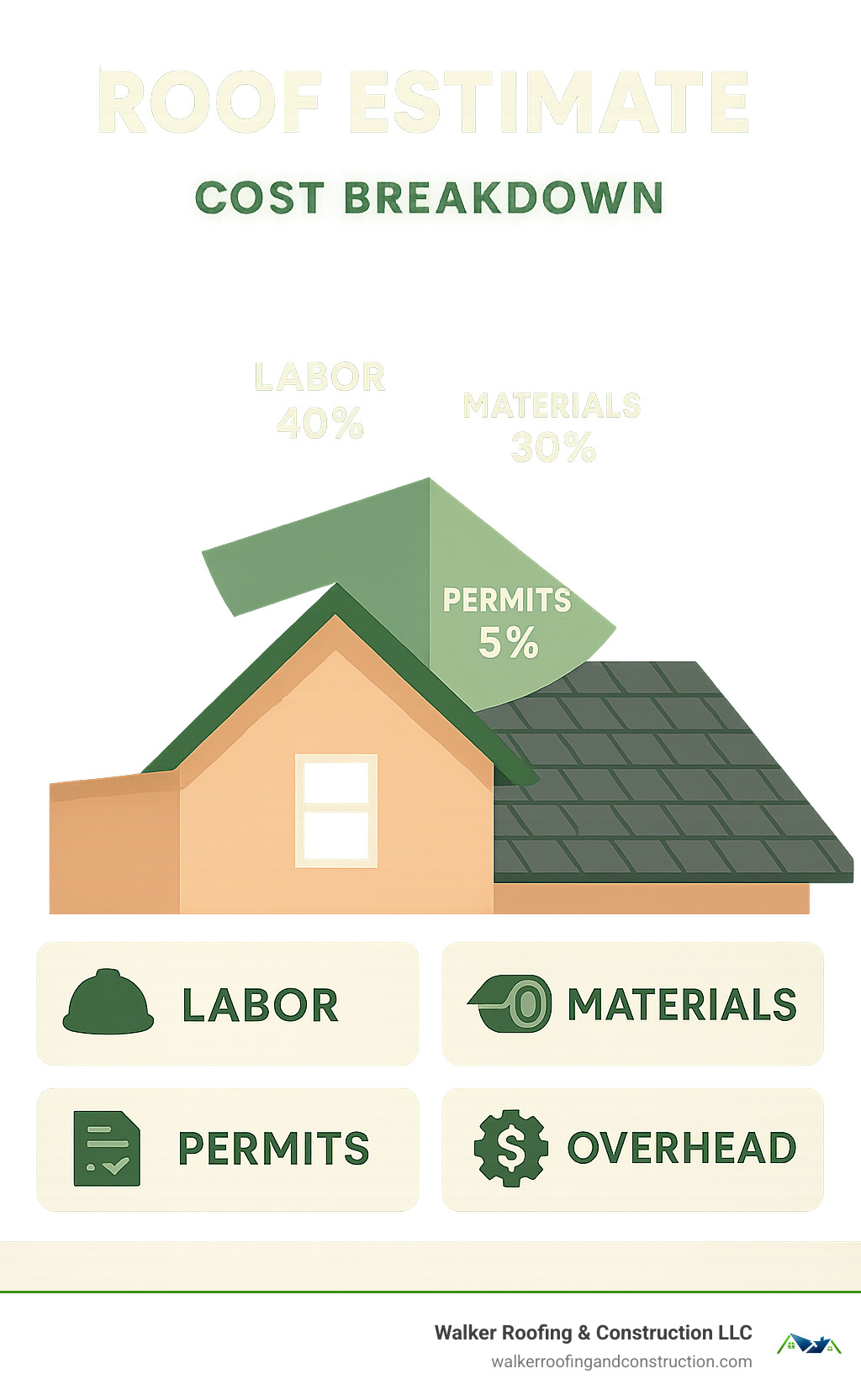
Labor represents 40-60% of your total roofing cost. Skilled roofers in Northeast Ohio earn $20-35 per hour. A typical crew can install 15-20 squares per day under ideal conditions.
Professional equipment and insurance separate legitimate contractors from fly-by-night operators. Professional contractors carry general liability insurance, workers’ compensation, and bonding for larger projects.
Permit fees typically range from $100-500 but ensure your roof meets local building codes and helps with insurance claims.
Step-by-Step Guide: From DIY Measurements to Comparing Multiple Roof Estimates
Getting a reliable roof estimate starts with understanding what you’re working with before contractors arrive. When you have basic measurements and know what questions to ask, you’re in control of the process.
Measure Your Roof Like a Pro Before Requesting a Roof Estimate
You don’t need to climb on your roof to get useful measurements. Start with your home’s footprint – walk around with a tape measure and calculate length times width. Add 2-3 feet on all sides for overhangs.
Understanding roof pitch makes a huge difference. If your roof looks moderately steep, multiply your footprint by about 1.24. The roofing industry measures in “squares” – each square equals 100 square feet.
Using Online Calculators vs. On-Site Visits for a Roof Estimate
Online roof calculators provide instant ballpark numbers for initial budget planning. They’re excellent for comparing material options, but online tools can’t see your roof – they don’t know about valleys, damage, or ventilation issues.
Professional on-site visits reveal details that matter most. An experienced contractor notices inadequate flashing, structural issues, and local building code requirements that online tools miss.
How to Read and Compare Roofing Contractor Estimates

Comparing roof estimates requires looking beyond the bottom line. Material specifications tell the real story – one estimate might say “architectural shingles” while another specifies exact products with warranties.
Pay attention to what’s included – complete tear-off, debris disposal, cleanup, and permits. Timeline expectations reveal contractor professionalism.
Watch for red flags like significantly low bids or door-to-door contractors appearing after storms.
Insurance Claims, Storm Damage & Your Roof Estimate
Document everything before calling contractors. Take photos and videos from multiple angles. Having a professional contractor present during insurance inspections often results in more thorough damage assessment.
Common Mistakes Homeowners Make When Reviewing a Roof Estimate
Choosing the lowest bid without considering quality often backfires. The cheapest estimate usually indicates shortcuts in materials or installation.
Overlooking ventilation upgrades is expensive long-term. Proper ventilation extends shingle life and prevents ice dam formation.
Questions to Ask Before Accepting a Roof Estimate

Asking the right questions reveals contractor professionalism. Verify licensing and insurance first. Ask to see current license numbers and insurance certificates.
Project management details matter – who supervises the crew? How do they handle cleanup? What’s the realistic timeline?
Warranty coverage requires attention to details. What does the workmanship warranty cover? How long does it last? Walker Roofing & Construction LLC provides comprehensive answers with their 10-year workmanship guarantee.
Conclusion & Next Steps
Getting a proper roof estimate doesn’t have to feel overwhelming. You’ve learned the key factors that drive costs, how to measure your roof, and what to look for in professional estimates.
Walker Roofing & Construction LLC has been helping Northeast Ohio families steer this process for over 20 years. What sets them apart is their CertainTeed Master Shingle Installer certification, 10-year workmanship guarantee, and commitment to helping homeowners through every step, especially with insurance claims.
Here’s your roadmap forward: Start by assessing what you need – repair or complete replacement? Use online calculators for ballpark figures, but get professional inspections for accurate assessments.
Get at least three detailed estimates from licensed, insured contractors. Check credentials, call references, and pay attention to communication quality.
Don’t automatically choose the cheapest bid. Quality materials and professional installation cost more upfront but deliver better long-term value.
Plan for the long term. Simple maintenance keeps your new roof performing at its best. Annual inspections and quick attention to minor issues prevent major problems.
For detailed information about replacement options and local pricing, check out More info about roof replacement to see what’s available throughout Mentor, Willoughby, Painesville, and surrounding communities.
The goal isn’t just getting a new roof – it’s getting the right roof installed by professionals who stand behind their work. That peace of mind is worth every penny.