Why Your Roof Damage Doesn’t Have to Break the Bank
Insurance claim roof repair can feel overwhelming when you’re staring at storm damage on your home’s most important protection. Your roof is your first line of defense against severe weather, and when hail, wind, or falling trees cause damage, the stress of navigating insurance claims often feels worse than the storm itself.
Here’s what you need to know about roof insurance claims:
- Most storm damage IS covered – Wind, hail, fire, and falling objects typically qualify
- File within your policy window – Usually 1 year, but some insurers extend after major storms
- Document everything – Photos, videos, and contractor reports are crucial
- Know your coverage type – Replacement Cost Value (RCV) pays more than Actual Cash Value (ACV)
- Work with experienced contractors – They help maximize your claim and ensure quality repairs
The good news? With the right approach, most homeowners successfully steer the claims process and get their roofs properly repaired or replaced.
In areas like Colorado, which ranks second in the US for hail-related insurance claims with 94 hail events per year, homeowners have become experts at this process. The key is understanding what’s covered, documenting damage properly, and working with professionals who know how to deal with insurance companies.
The reality is simple: Insurance companies expect roof claims after severe weather. When you follow the right steps and have proper documentation, getting your claim approved becomes much easier.
Insurance Claim Roof Repair Basics: Coverage, Cost & Deadlines
When storm clouds roll away and you’re left staring at roof damage, understanding your homeowner’s insurance policy becomes your lifeline. Your roof falls under what insurers call “dwelling coverage,” which protects your home’s structure from unexpected damage.
The coverage type you have makes a huge difference in your wallet. There are two main types:
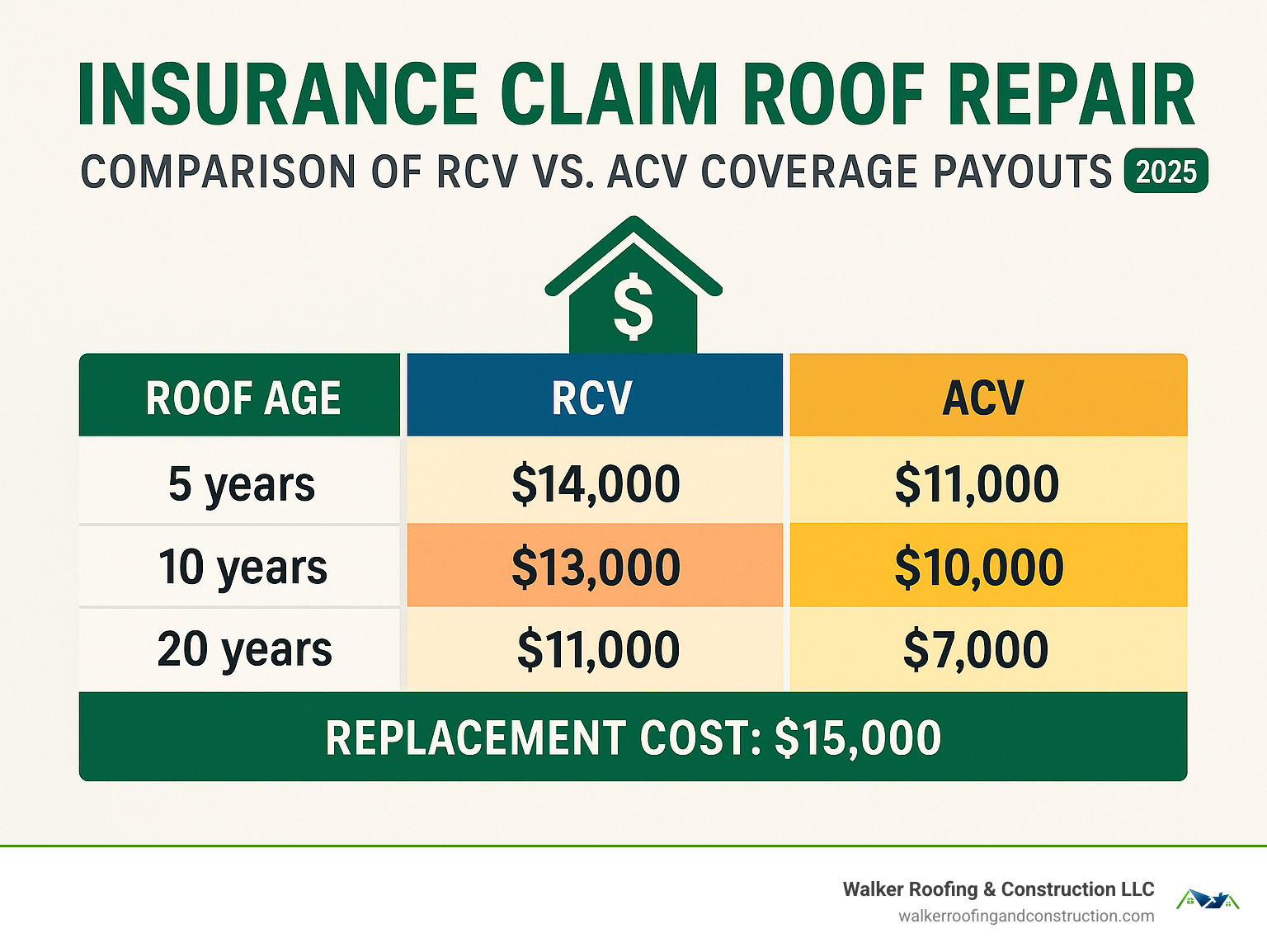
Replacement Cost Value (RCV) pays the full cost to repair or replace your roof with similar materials, minus your deductible. No depreciation calculations, no haggling over your roof’s age.
Actual Cash Value (ACV) factors in depreciation based on your roof’s age, which can leave you with a significant gap between what you receive and what repairs actually cost.
Here’s a real-world example: Your roof replacement costs $15,000, and you have a $1,000 deductible. With RCV coverage, you’d receive $14,000. With ACV coverage on a 10-year-old roof, you might only get $10,000 after depreciation – leaving you $4,000 short.
Your deductible is another piece of the puzzle. Standard deductibles typically range from $500 to $2,000, but wind and hail deductibles can be much steeper – sometimes 2% to 20% of your home’s total insured value.
Time is more critical than you might think. Most insurance policies give you one year to file claims after damage occurs, but don’t let that fool you into thinking you can wait. The sooner you file, the better your chances of approval.
What Roof Damage Is Covered Under Insurance Claim Roof Repair?
Most homeowner’s policies cover “covered perils” – sudden, accidental events that can damage your roof.
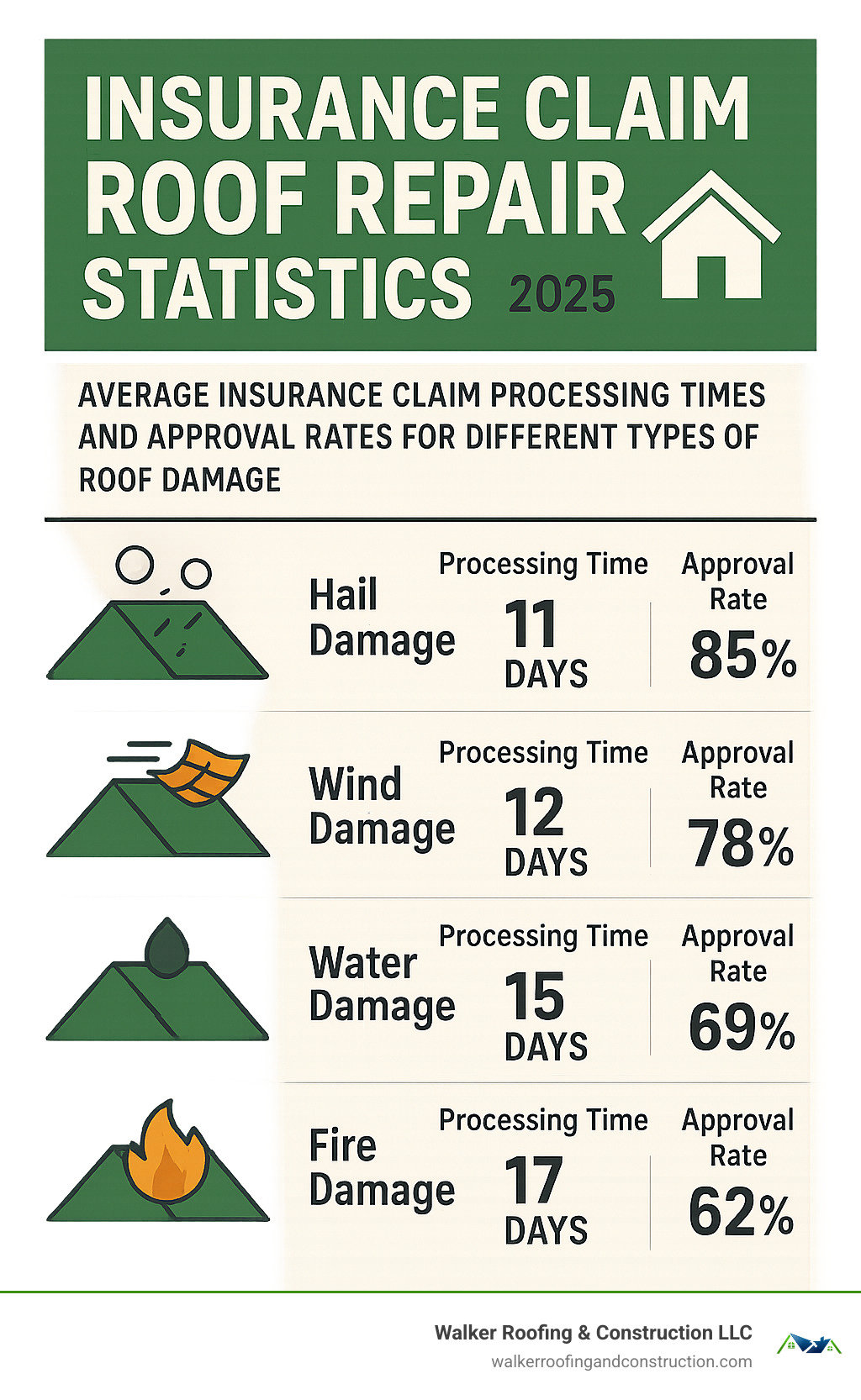
Wind damage is one of the most common covered claims. High winds don’t just blow shingles off – they can lift edges, break seals, and create entry points for water damage.
Hail damage comes in two varieties. Visible damage includes cracked, punctured, or missing shingles. Invisible damage – like granule loss that shortens your roof’s lifespan – also counts as a covered loss.
Fire damage covers flames, lightning strikes, electrical faults, and fires spreading from other sources.
Falling objects during storms are typically covered, whether it’s trees, large branches, or debris picked up by wind.
What Roof Damage Is NOT Covered
Normal wear and tear tops the exclusion list. If your 20-year-old roof is simply showing its age, that’s considered normal maintenance, not an insurable event.
Neglect and poor maintenance can void otherwise valid claims. If you haven’t maintained your property reasonably, insurers may deny claims for resulting damage.
Flood damage requires separate coverage entirely. Standard homeowner’s policies won’t cover water damage from external flooding.
Filing and Winning Your Claim: Step-by-Step Guide
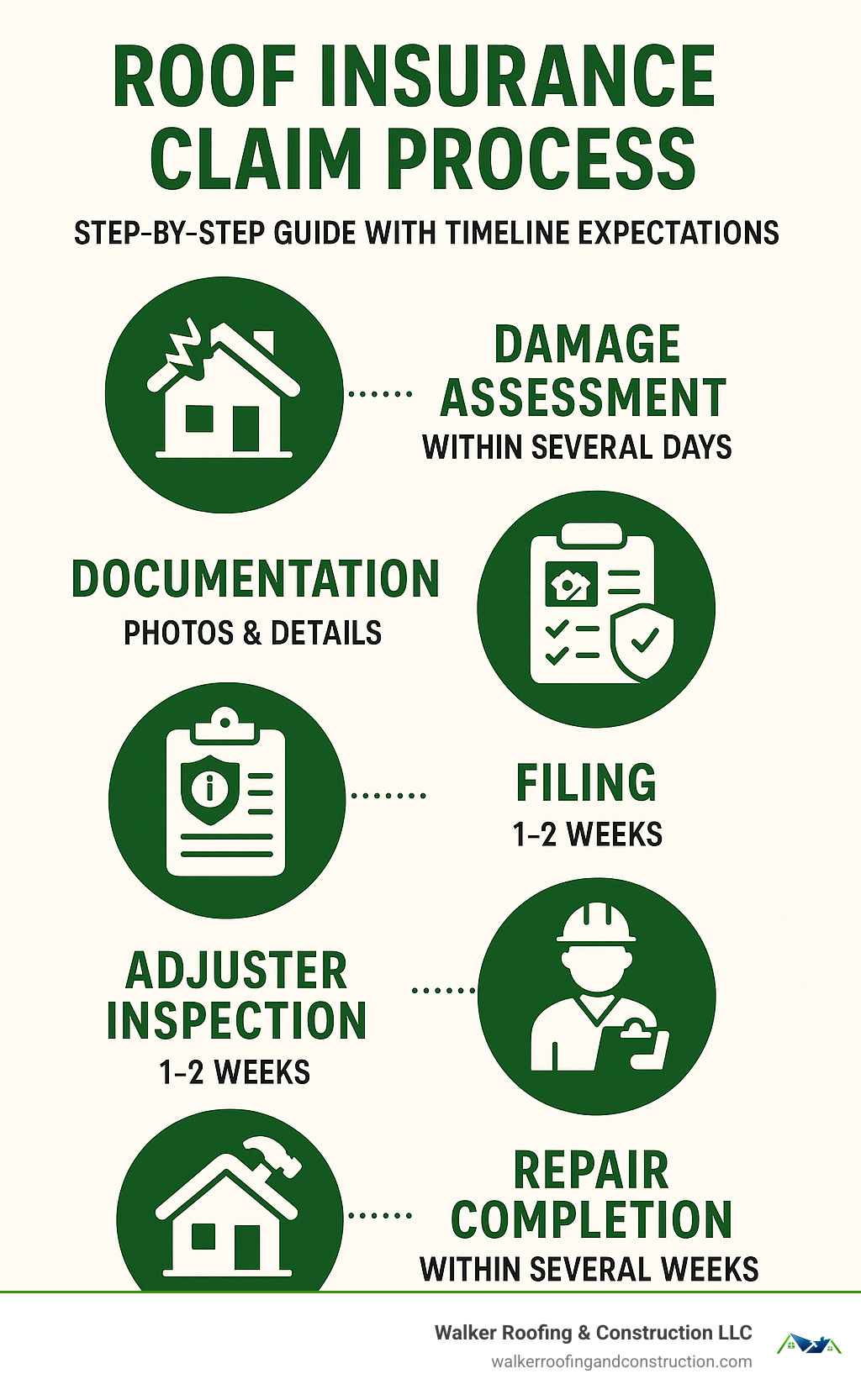
Getting your insurance claim roof repair approved typically takes 30-60 days from filing to payment. The secret? Thorough documentation and working with professionals who speak insurance-company language.
You’ll need several key documents: High-resolution photos of all damage, professional contractor inspection report, insurance policy copy, and weather reports from the damage date. Keep receipts for emergency repairs like tarping – these costs are often reimbursable.
Step 1: Immediate Actions After Finding Damage
Your safety trumps everything else. Never climb on a damaged roof, especially when wet or icy. If water is actively leaking, emergency tarping becomes your top priority. Most policies reimburse these emergency measures, so keep those receipts.
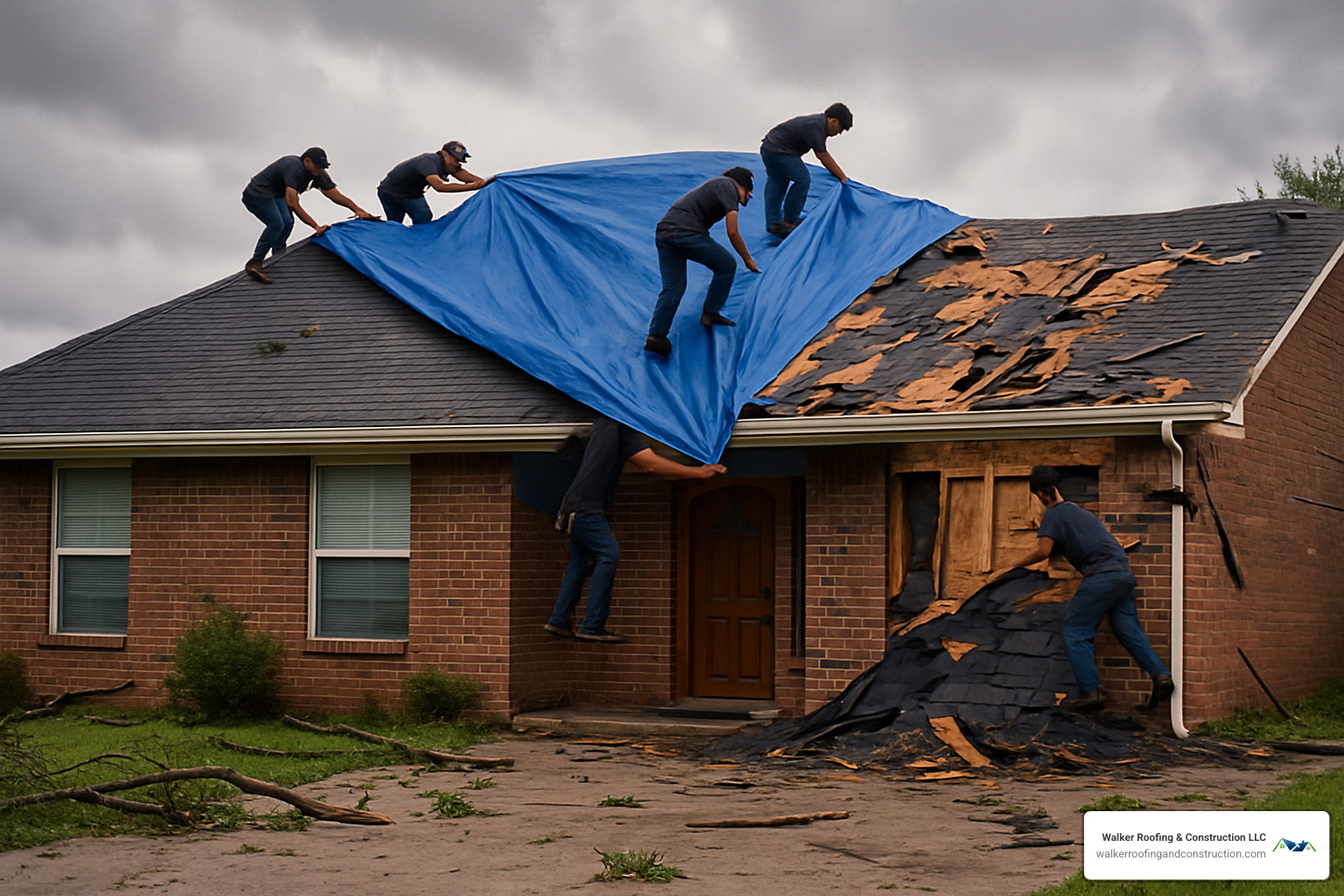
Document everything like a detective. Note the exact date and time of the storm. Take photos from multiple angles, including close-ups of damaged materials and wide shots showing the full scope.
Step 2: Documentation & Roof Inspection
Professional inspection separates successful claims from denied ones. Licensed roofing contractors spot damage that untrained eyes miss completely.
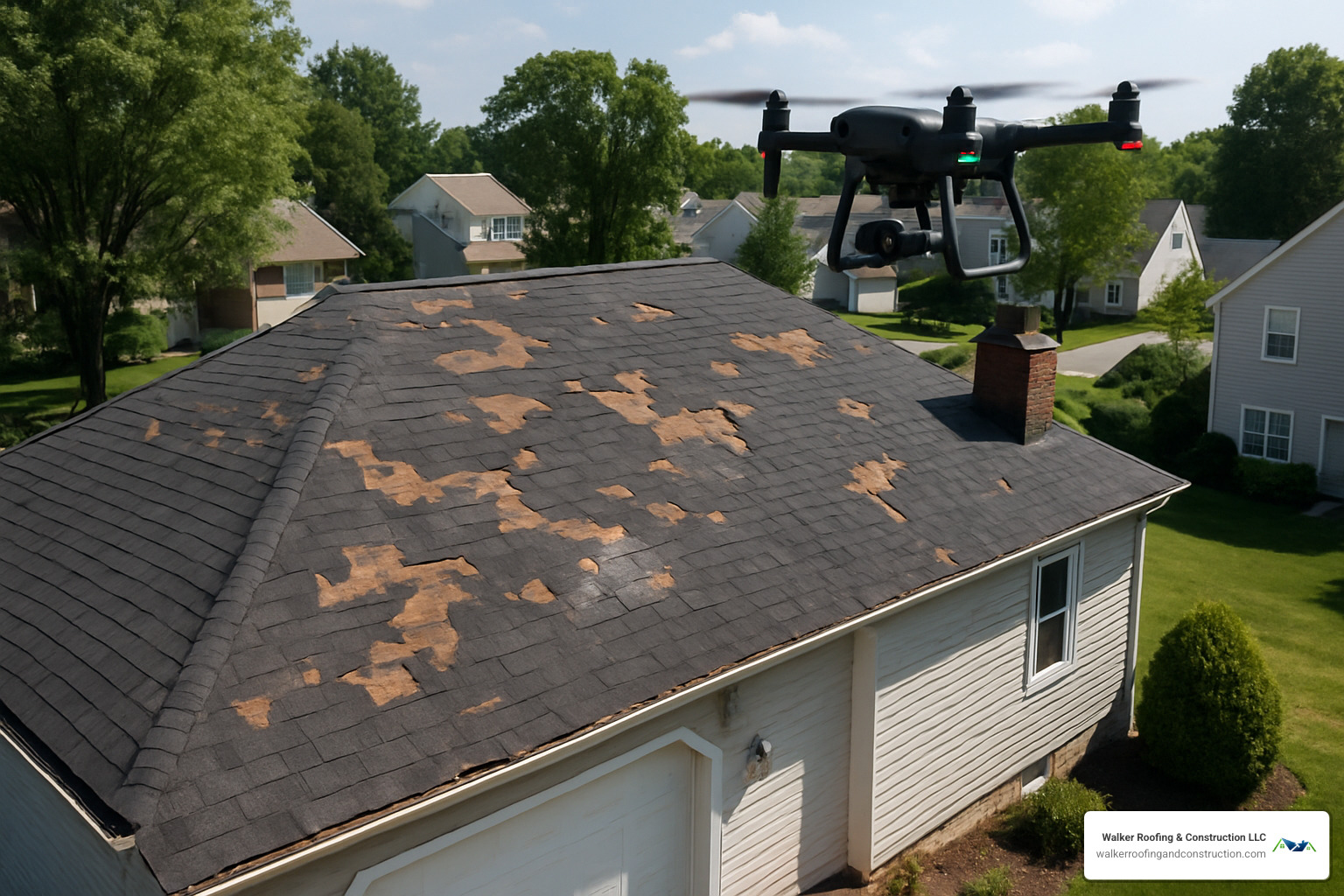
Modern drone technology has revolutionized roof inspections. These cameras capture detailed footage safely, providing crystal-clear documentation that insurance adjusters can’t dispute.
Industry-standard estimates using Xactimate software speak the same language as insurance adjusters. When your contractor’s estimate matches the adjuster’s format, approval moves faster.
Step 3: Working with Adjusters and Negotiating
Insurance adjusters are trained professionals whose job involves evaluating damage while keeping payouts within guidelines. Having your contractor present during inspection ensures nothing gets overlooked.
The supplement process is your secret weapon when initial estimates seem low. If the adjuster misses items or undervalues repairs, your contractor can file a supplement requesting additional coverage.

Understanding recoverable depreciation saves headaches. Under RCV policies, insurers often split payments. The first covers actual cash value, while the second payment comes after you complete repairs and submit invoices.
Step 4: Repair vs Replace & Avoiding Pitfalls
Never let contractors offer to “waive” your deductible – this constitutes insurance fraud and can void your policy.
Storm chasers pose real dangers after severe weather. Choose established local contractors with proper licensing, insurance, and solid references instead.
Conclusion
When your roof takes a beating from Mother Nature, the path to recovery doesn’t have to feel like climbing Mount Everest. Insurance claim roof repair becomes manageable when you understand the game plan and team up with people who’ve walked this road thousands of times before.
Think of it this way: insurance companies expect roof claims after storms. They budget for them, they have systems for them, and when you follow the right steps, they pay them. The trick is knowing those steps and having someone in your corner who speaks “insurance adjuster” fluently.
Walker Roofing & Construction LLC has been helping Northeast Ohio homeowners steer this exact situation for over 20 years. They’ve seen every type of storm damage, worked with every major insurance company, and know exactly how to document damage so adjusters can’t ignore it.
As certified CertainTeed Master Shingle Installers, they bring technical expertise that goes way beyond just filing paperwork. They understand how hail damage affects different roofing materials, how wind uplift compromises shingle integrity, and how to spot the subtle signs of damage that untrained eyes miss.
Their 10-year workmanship guarantee means you’re not just getting your roof fixed – you’re getting peace of mind that lasts long after the insurance check clears. Because let’s be honest, the last thing you want is to deal with roof problems again in a few years.
The bottom line is simple: most storm damage gets covered when you do things right. Proper documentation beats wishful thinking every time. Professional help beats going it alone. And understanding your coverage beats hoping for the best.
Your roof protects everything you care about most. When it gets damaged, you deserve more than a quick patch job and crossed fingers. You deserve professionals who will fight for every dollar you’re entitled to and then deliver work that stands the test of time.
Ready to get your roof – and your peace of mind – back? Visit Walker Roofing & Construction’s roof repair services to learn how their expertise can turn your insurance claim headache into a success story.