Save Money and Energy with Better Windows
Home energy efficient windows are designed to minimize heat transfer, reduce drafts, and cut energy costs in your Northeast Ohio home. Here’s what you need to know at a glance:
| Feature | Benefit |
|---|---|
| Double or triple-pane glass | Creates insulating air barrier between panes |
| Low-E coatings | Reflects heat while allowing light to pass through |
| Insulating gas fills | Argon or krypton gas improves thermal performance |
| Quality frame materials | Reduces heat transfer around glass |
| Proper installation | Prevents air leaks and moisture problems |
Did you know that heat gain and heat loss through windows are responsible for 25%–30% of residential heating and cooling energy use? For many homeowners in Northeast Ohio, that translates to hundreds of dollars literally flying out your windows each year.
Replacing old windows with ENERGY STAR certified models can lower household energy bills by an average of 12% nationwide. For homeowners replacing single-pane windows, this can mean savings of $101–$583 annually.
Beyond the financial benefits, energy efficient windows reduce your carbon footprint and provide added comfort. They help eliminate cold drafts and hot spots near windows, maintain more consistent indoor temperatures, and even reduce fading of furniture and flooring by blocking up to 75% of damaging UV rays.

How Home Energy Efficient Windows Work & Why They Matter
Home energy efficient windows aren’t just pieces of glass – they’re sophisticated systems designed to keep your Northeast Ohio home comfortable year-round while slashing your energy bills.
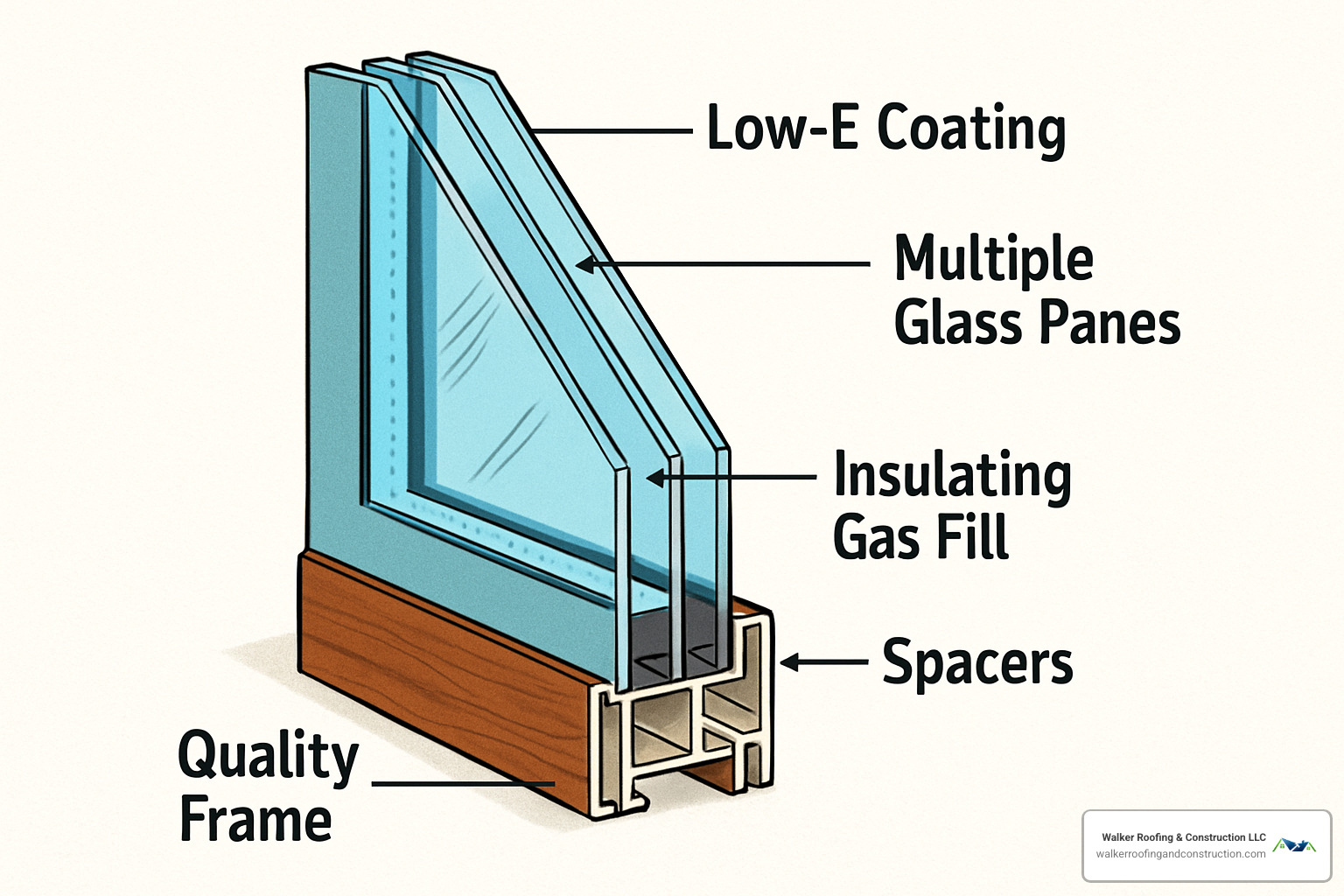
Modern windows use multiple panes with insulating spaces between them. Low-emissivity (Low-E) coatings act like invisible thermal mirrors that reflect heat while allowing sunlight through. Between the glass panes, insulating gas fills (typically argon or krypton) provide better insulation than regular air.
Warm-edge spacers separate the glass panes while minimizing heat loss around the perimeter. Quality frame materials like vinyl, fiberglass, wood, or composites insulate far better than traditional aluminum frames.
Energy Loss Through Glass Explained
Your windows might be causing high energy bills through three main ways:
- Conduction: Heat transfers directly through solid materials
- Radiation: Heat energy passes through glass as infrared radiation
- Air leakage: Gaps and cracks allow heated or cooled air to escape
Standard windows can leak up to 30% of your heating and cooling. Energy efficient models tackle all these issues head-on.
Benefits & Bill-Savings
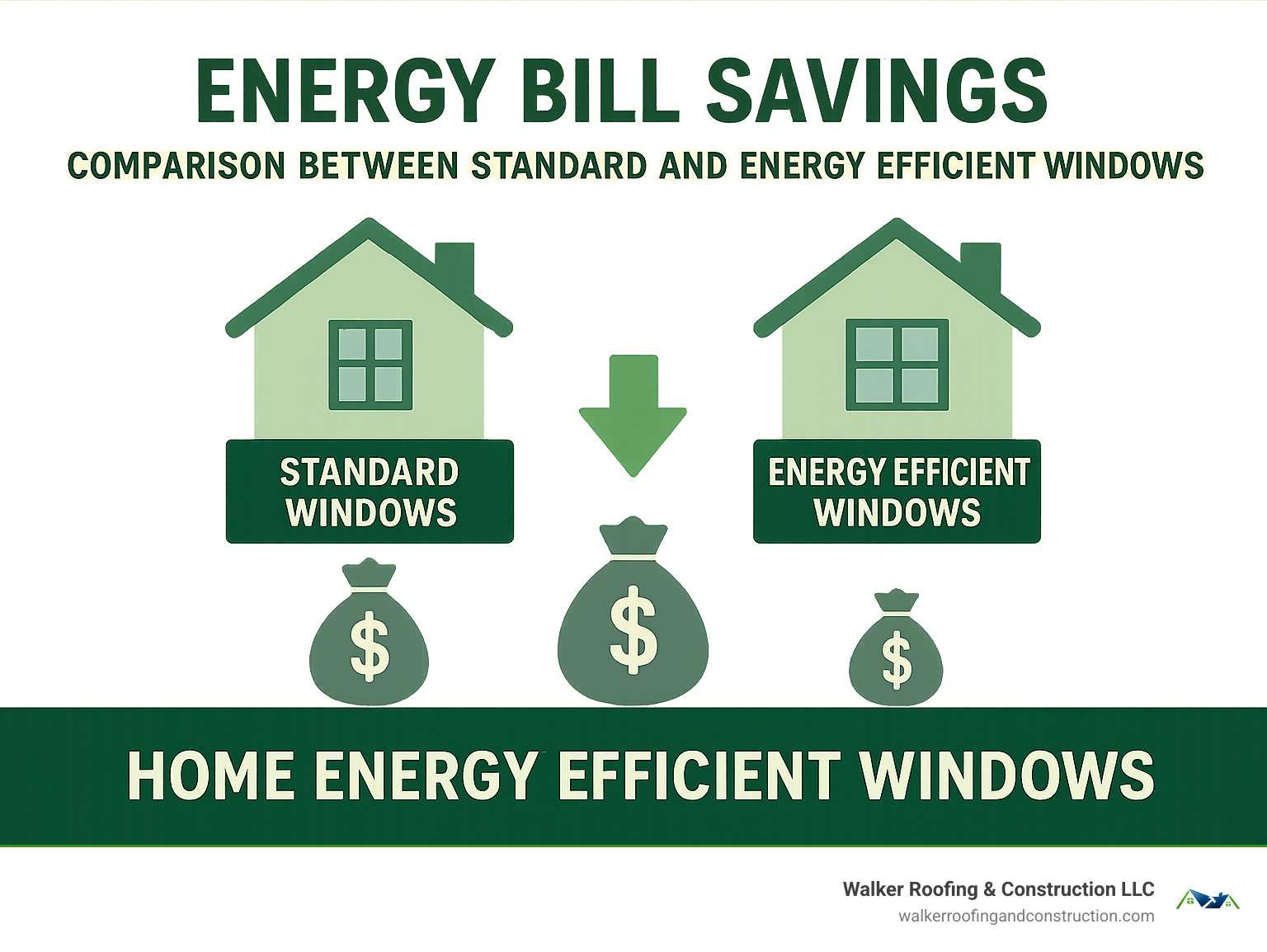
Upgrading to home energy efficient windows delivers real financial impact. ENERGY STAR certified windows cut heating and cooling costs by an average of 12% nationwide.
Replace drafty single-panes with ENERGY STAR models and you could save between $101-$583 annually. Even upgrading from older double-panes yields savings of $27-$197 each year.
Energy efficient windows help maintain more consistent indoor temperatures, potentially allowing you to lower your thermostat by two degrees in winter – which alone can save 8% on heating costs!
Choosing & Installing Home Energy Efficient Windows
Reading ENERGY STAR & NFRC Labels
The ENERGY STAR label confirms a window meets efficiency standards for our Northeast Ohio climate (Northern Zone). The NFRC label shows exactly how it performs:
- U-factor: How well the window keeps heat inside. Look for 0.30 or lower.
- Solar Heat Gain Coefficient (SHGC): How much sunshine turns into indoor heat. Around 0.40 works well for our climate.
- Visible Transmittance (VT): How much daylight comes through.
- Air Leakage: How draft-proof your windows are.
Types of Energy-Efficient Windows
- Double-Pane Windows: Two glass panes with insulating space between them. Most popular choice offering excellent performance at a reasonable price.
- Triple-Pane Windows: Three glass panes with two insulating spaces. Cost more but provide superior insulation and noise reduction.
- Fixed Windows: Don’t open, which means no moving parts to leak air.
- Casement Windows: Crank outward and seal tighter when wind blows against them.
For historic homes, Storm Windows can improve efficiency without changing the original character. Low-E Window Films can improve existing windows’ performance as a stopgap measure.
Proper Installation = Peak Performance
Even the best windows won’t perform well if poorly installed. Proper installation requires correct flashing, careful air sealing around the frame, and appropriate insulation in the rough opening. Windows must be perfectly level, plumb, and square to operate correctly and maintain their weather-tight seal.
Upgrading Without Full Replacement
Not ready for new windows? Consider these improvements:
- Weather-stripping around operable parts to reduce drafts
- Caulking gaps around window frames to stop air leaks
- Storm Panels to add an extra layer of insulation
- Solar Control Film to reduce heat gain and UV damage
Incentives & Rebates
The federal Energy Efficient Home Improvement Credit lets you claim up to 30% of qualified expenses for energy-efficient windows, with a $600 annual cap through 2032. Many Northeast Ohio utility companies also offer rebates for energy-efficient window installations.
Conclusion & Next Steps
Choosing home energy efficient windows is a smart home improvement decision. With energy savings of 12-13% on heating and cooling costs, you’ll notice the difference in your monthly bills right away. Plus, you’re looking at a solid 69.5% return on investment for your home’s value.
For Northeast Ohio residents, quality windows that can handle our challenging weather conditions are essential. Those winter winds off Lake Erie and summer humidity demand windows that perform year-round.
The financial incentives make this decision even easier. With federal tax credits of up to $600 available through 2032 and potential utility rebates from local providers, there’s never been a better time to upgrade.
Home energy efficient windows create a more comfortable living space without cold drafts in winter or overheated rooms in summer. They reduce your carbon footprint and represent a solid investment in your home’s future.
Whether you’re ready for a complete window replacement or looking to improve what you already have, understanding your options is the first step. Energy efficient windows are your home’s shield against energy waste and extreme temperatures, working daily to keep you comfortable and your energy bills in check.