When the Storm Hits: Emergency Roof Repair Essentials
Emergency storm roof repair is often needed immediately after severe weather events in Ohio. If you’re facing roof damage right now, here’s what you need to know:
Quick Emergency Storm Roof Repair Steps:
1. Safety first – Stay out of rooms with sagging ceilings
2. Document damage – Take photos/videos for insurance
3. Contain water – Place buckets under active leaks
4. Call a professional – Contact Walker Roofing for immediate assistance
5. Temporary protection – A roof tarp can prevent further damage
When harsh storms sweep through Northeast Ohio, they can leave your home vulnerable in minutes. High winds tear off shingles, hail punches holes in your roofing, and falling trees can create devastating punctures. Your roof is your home’s first line of defense, and when it fails, you need to act quickly.
“Living without a roof just isn’t an option,” as one roofing professional puts it. Water can begin causing serious damage within 24-48 hours, leading to mold growth, damaged insulation, and compromised structural integrity.
The average cost to install a temporary tarp is around $450, while more extensive emergency repairs after severe storm damage can range much higher. Most homeowner insurance policies cover these emergency measures when properly documented.
After major storms, local roofing contractors often face high demand, meaning delays of days or even weeks for repairs. This makes knowing how to temporarily protect your home even more crucial.

Recognizing the Need for Emergency Storm Roof Repair

Not every missing shingle means you need to panic, but some roof situations definitely qualify as “drop everything and act now.” As an Ohio homeowner, knowing when you’re facing a genuine roofing emergency can save you thousands in secondary damage.
A true emergency storm roof repair situation is pretty straightforward to identify. Your roof needs immediate attention when your living room suddenly has a skylight you didn’t pay for, your ceiling resembles a waterfall, or that massive oak tree is now an unwelcome houseguest.
“A small leak can actually be more urgent than a big one if it’s dripping onto your electrical panel,” says one of our veteran Walker Roofing technicians. “It’s not always about how much water is coming in, but where it’s landing that determines how quickly you need to act.”
Common Triggers for Emergency Storm Roof Repair
Ohio’s weather can be downright brutal on roofs. Our team sees certain damage patterns repeatedly across Northeast Ohio:
High winds are the number one culprit for emergency storm roof repair calls in our service area. Those 60+ mph gusts during summer thunderstorms can peel back shingles like the lid on a sardine can, especially on older roofs.
Hailstones might be rare visitors, but they’re never welcome ones. Even marble-sized hail can create divots in your shingles that compromise their water-shedding ability. After a hailstorm, those little black granules filling your gutters are essentially your roof’s armor being washed away.
“Tree damage scenarios keep me up at night,” admits our senior estimator. “There’s nothing quite like the panic in a homeowner’s voice when they call saying there’s a maple tree sitting in their master bedroom.” Fallen limbs and trees create immediate, obvious emergencies that need same-day response.
Ice dams are our winter nemesis in Ohio. That picturesque snow-capped roof can hide a destructive freeze-thaw cycle that forces water under your shingles and into your home. By the time you notice the interior leaking, significant damage may have already occurred.
While not storm-related directly, pest damage creates vulnerabilities storms exploit. That family of squirrels nesting in your attic isn’t just annoying – they’re creating entry points for water during the next downpour.
Lightning strikes, though rare, create immediate fire hazards that can quickly destroy a roof and endanger your family.
Perhaps most frustrating of all, neglected maintenance often transforms minor issues into full-blown emergencies during storms. That loose flashing you’ve been meaning to fix becomes a major leak point when heavy rains arrive.
DIY Damage Assessment for Emergency Storm Roof Repair
After the storm passes and you’re certain it’s safe, a quick assessment can help determine if you need professional emergency storm roof repair:
From the safety of the ground, grab a pair of binoculars or use a drone to examine your roof. Look for obvious red flags like missing shingles, punched-in areas, or debris impact points. Check your gutters for unusual amounts of granules, which indicate deteriorating shingles. Examine flashing around chimneys and vents for separation or damage.
Inside your home, the attic tells the most honest story about your roof’s condition. Water stains, visible daylight through the roof deck, or dripping moisture are all clear signs you need immediate help. Brown spots on your ceiling larger than an orange mean you can’t wait for repairs.
“The nose knows,” as our inspection team often says. Musty odors in your attic or upper floors can indicate water intrusion even before visible damage appears. And if your energy bills suddenly spike for no apparent reason, your roof might be letting air escape.
Safety first! I can’t emphasize this enough – stay off your roof, especially after a storm. We’ve seen too many homeowners end up in the emergency room trying to save a few bucks. Our Walker Roofing technicians have proper safety equipment and training to inspect damaged roofs without becoming statistics themselves.
For more detailed information about steps to take after storm damage, visit our post-storm guidance page. And if you’re concerned about potential storm damage, our Storm Damage Repair specialists can provide a thorough assessment.
From Quick Fixes to Professional Help: Acting Fast When the Roof Gives Way
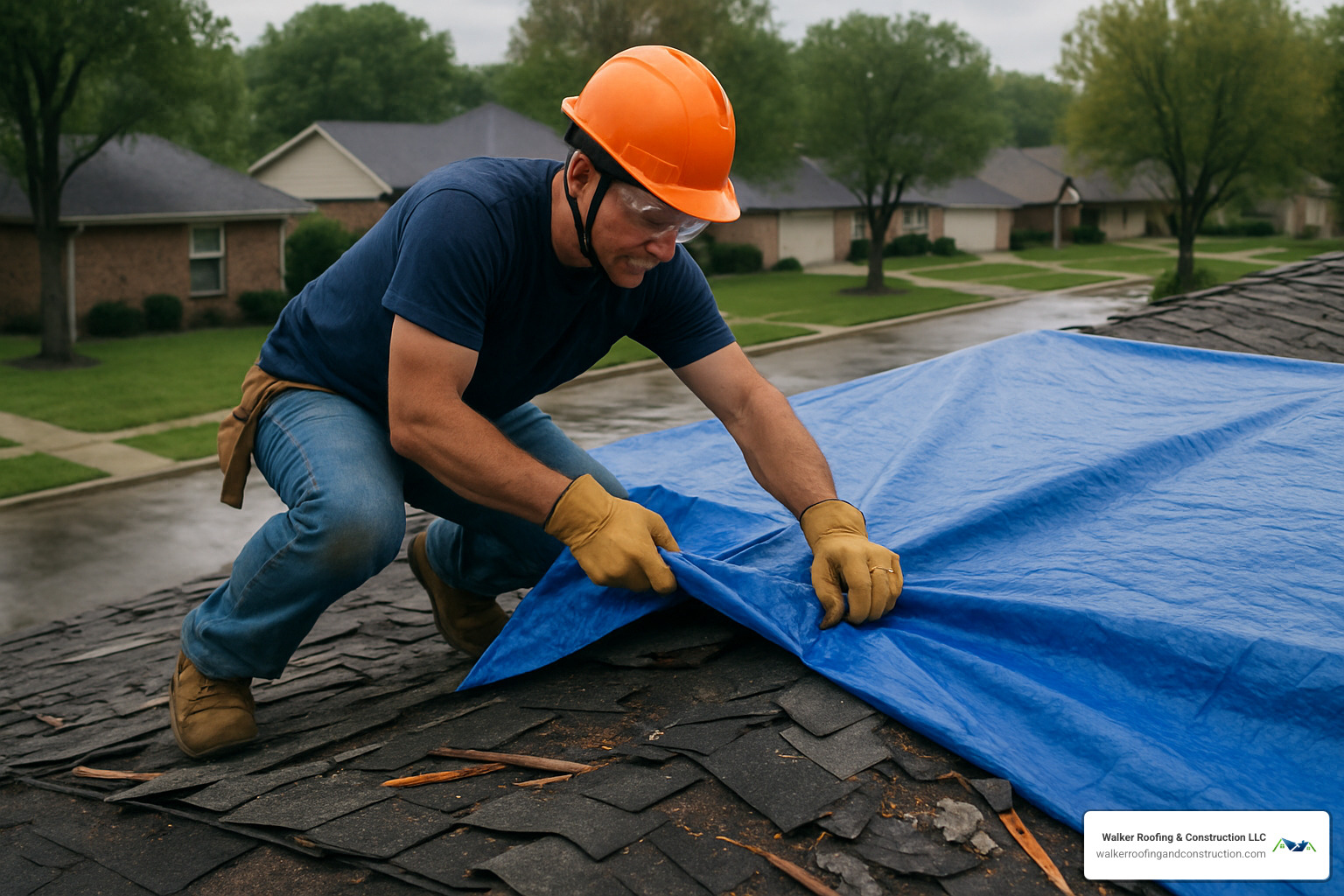
When Mother Nature tears through your roof, the clock starts ticking immediately. What begins as a small leak can quickly transform into thousands of dollars in damage to your home’s structure, insulation, drywall, and cherished belongings.
“The moment you spot a roof leak is the moment you need to act,” says the team at Walker Roofing & Construction LLC, who’ve been helping Northeast Ohio homeowners weather storms for over two decades. “Every minute counts when water is finding its way into your home.”
If you’ve just finded storm damage, your first priority should be containing the situation. Place buckets under active leaks and move furniture and valuables out of harm’s way. Use plastic sheeting to channel water flow if needed, and immediately start documenting everything with photos and videos – your insurance company will thank you later.
Most importantly, don’t delay calling for professional help. While you wait for the experts to arrive, a properly installed tarp can be your roof’s temporary lifeline.
Water is relentless – it only takes 24-48 hours for mold to begin growing in damp materials. Beyond the immediate water damage, delays can turn a simple repair into a complete roof deck replacement, not to mention the safety risks of potential collapse under accumulated water weight.
Safety First & What NOT to Do
During a roofing crisis, knowing what to avoid is just as crucial as knowing what to do.
Never climb onto a damaged roof – what looks stable from below might be compromised and dangerous. Those wet shingles are as slippery as an ice rink, and it’s simply not worth the risk.
Keep metal ladders stored away during electrical storms or if power lines are down – the risk of electrocution is very real. If water is seeping near light fixtures or electrical systems, turn off power to those areas at your breaker box before touching anything.
Mother Nature has a wicked sense of timing, but resist the urge to attempt repairs during lightning storms or high winds. The roof will still be there when conditions improve, and you’ll be in one piece to fix it.
Perhaps most importantly, be wary of “storm chasers” – those traveling contractors who mysteriously appear in neighborhoods after major weather events. “These folks often leave behind more problems than they solve,” warns a local roofing expert. “They’re here today, gone tomorrow – along with your deposit and any hope of warranty service.”
Instead, trust established local companies like Walker Roofing & Construction LLC, with real references and a physical address you can actually visit.
Step-by-Step: How to Tarp Your Roof Temporarily
Sometimes professional help can’t arrive immediately, especially after widespread storm damage. A properly installed tarp can buy you precious time and prevent further water intrusion. Here’s how to do it right:
First, select a heavy-duty tarp with UV protection that extends at least 3-4 feet beyond the damaged area on all sides. Thicker tarps (6 mil or more) will stand up better to Ohio’s unpredictable weather.
Safety is non-negotiable – wait for clear weather if possible, secure your ladder properly, and never work alone. A helper on the ground can be a literal lifesaver. And please, use a safety harness if you have one available.
When positioning the tarp, start at the roof’s bottom edge and roll upward, extending it over the ridge line for better water shedding. Smooth out any wrinkles that might collect water – those puddles will find a way in eventually.
For securing the tarp, you have two main options:
The non-penetrating method is often preferred by insurance adjusters because it doesn’t create new holes in your roof. Simply wrap the tarp edges around 2x4s to create “sand bags” and place additional weights on top to hold everything in place.
The penetrating method provides more security in high winds. Wrap the tarp end around a 2×4 and secure the wood to the roof using screws with washers every 8-12 inches. Just be sure to seal screw heads with roofing cement to prevent new leaks.
“Always extend the tarp at least 4 feet beyond the damaged area in all directions,” advises a roofing professional. “And remember to tuck the top edge under the shingles on the opposite side of the ridge – that’s how you keep water from sneaking underneath.”
A good tarp job can last 1-6 months depending on weather and materials, but it’s no substitute for proper repairs. Think of it as a bandage, not a cure.
For more detailed instructions on emergency tarping, check out this helpful guide from Angi on handling emergency roof repairs.
When to Call the Pros & What They’ll Do
Some situations simply demand immediate professional help – structural damage, large areas of missing shingles, fallen trees on your roof, or multiple extensive leaks should all trigger an emergency call to the experts.
When you contact Walker Roofing & Construction LLC for emergency storm roof repair, their response follows a proven protocol. Their emergency team springs into action quickly, even during those hectic periods after major storms when everyone’s phone is ringing off the hook.
Their technicians arrive ready to conduct a thorough assessment, looking not just at obvious damage but also checking for hidden issues that might cause problems later. They’ll immediately stabilize your roof with proper tarping techniques while developing a comprehensive repair plan.
One of Walker’s specialties is insurance claims assistance – they’ll help document everything properly so you can maximize your coverage. As certified CertainTeed Master Shingle Installers, their permanent repairs come with quality materials and their signature 10-year workmanship guarantee.
| Service | Average Cost | Timeline |
|---|---|---|
| Emergency tarp installation | $450-$700 | Same day |
| Basic shingle repair | $300-$1,000 | 1-3 days |
| Partial roof replacement | $1,500-$4,000 | 1-2 weeks |
| Structural repair + replacement | $5,000-$10,000+ | 2-4 weeks |
Note: Costs vary based on damage extent, materials, and other factors. Walker Roofing & Construction LLC provides free, detailed estimates.
Documenting Damage & Navigating Insurance Claims
Most homeowner’s insurance policies cover storm damage, but the devil is in the details – and the documentation.
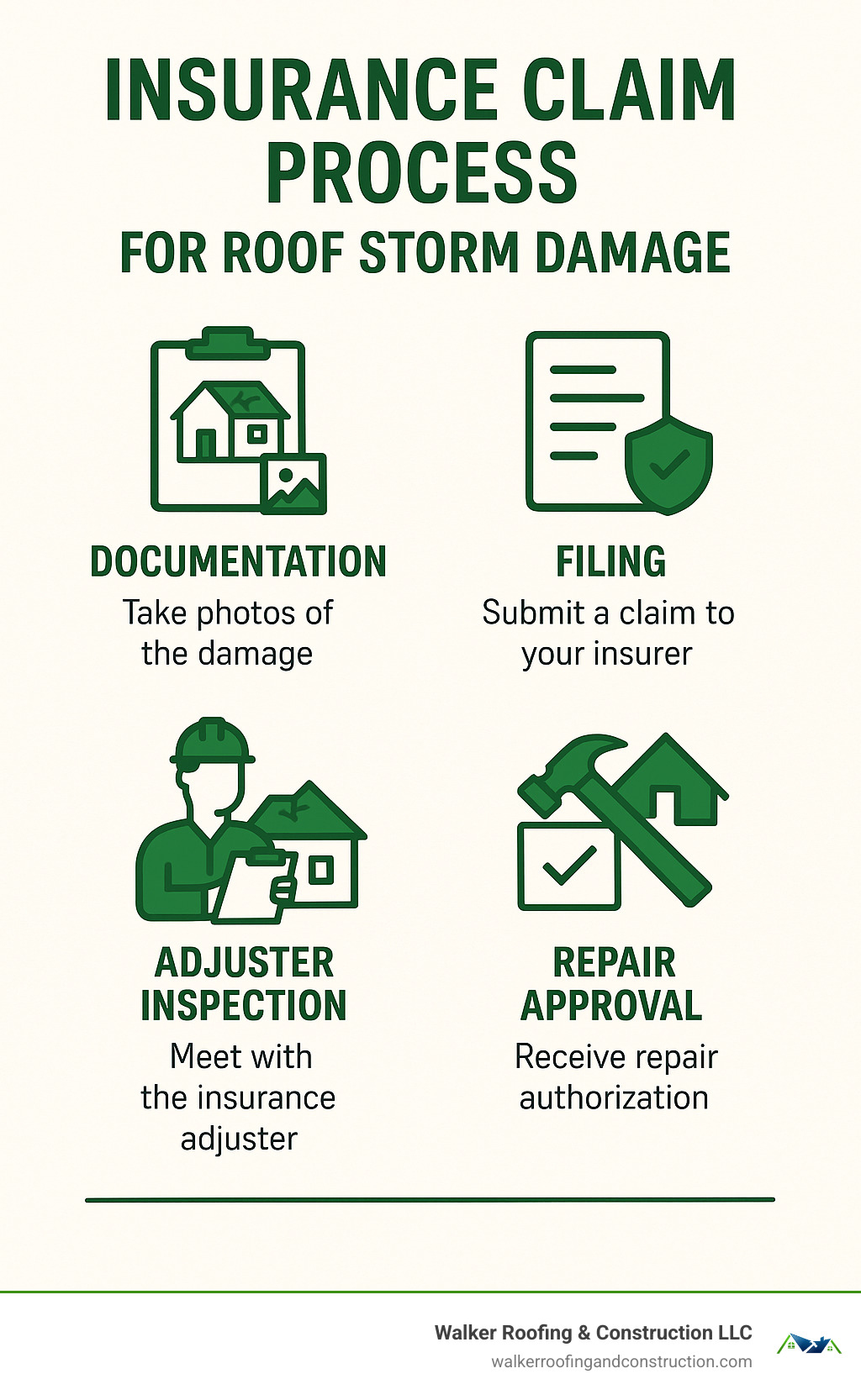
Start by capturing clear photos and videos from multiple angles, showing both the exterior roof damage and any resulting interior water issues. Create a detailed inventory of affected areas and items, and carefully save every receipt related to the emergency.
Contact your insurance company promptly – most policies have strict timelines for reporting damage, and delays can lead to denied claims. Before making that call, review your coverage details, understand your deductible, and note any exclusions.
When the insurance adjuster visits, be prepared. Have your documentation organized and be ready to point out all damaged areas. This is where Walker Roofing & Construction LLC’s expertise becomes invaluable – they can serve as your advocate during the inspection.
“Many homeowners don’t realize their insurance typically covers emergency roof repairs after storms,” notes an industry expert. “But insurance companies expect you to take reasonable steps to prevent further damage, like tarping a leaking roof.”
Walker Roofing has steered countless insurance claims over their 20+ years in business. Their team knows how to translate insurance-speak, document damage properly, and ensure you receive fair compensation for all covered damages – from initial emergency tarping through complete restoration.
For additional guidance on insurance claims, check out IKO’s article on seven things homeowners need to know before filing a roofing insurance claim.
Conclusion: Staying Ahead of the Storm—and Getting Expert Help Fast

You know what they say about an ounce of prevention—and when it comes to your roof, that wisdom couldn’t be more true. The most effective emergency storm roof repair is actually the one you never need to make.
Living in Ohio means your home faces everything from summer thunderstorms to winter blizzards. That’s why we at Walker Roofing & Construction LLC believe a proactive approach saves both your roof and your wallet in the long run.
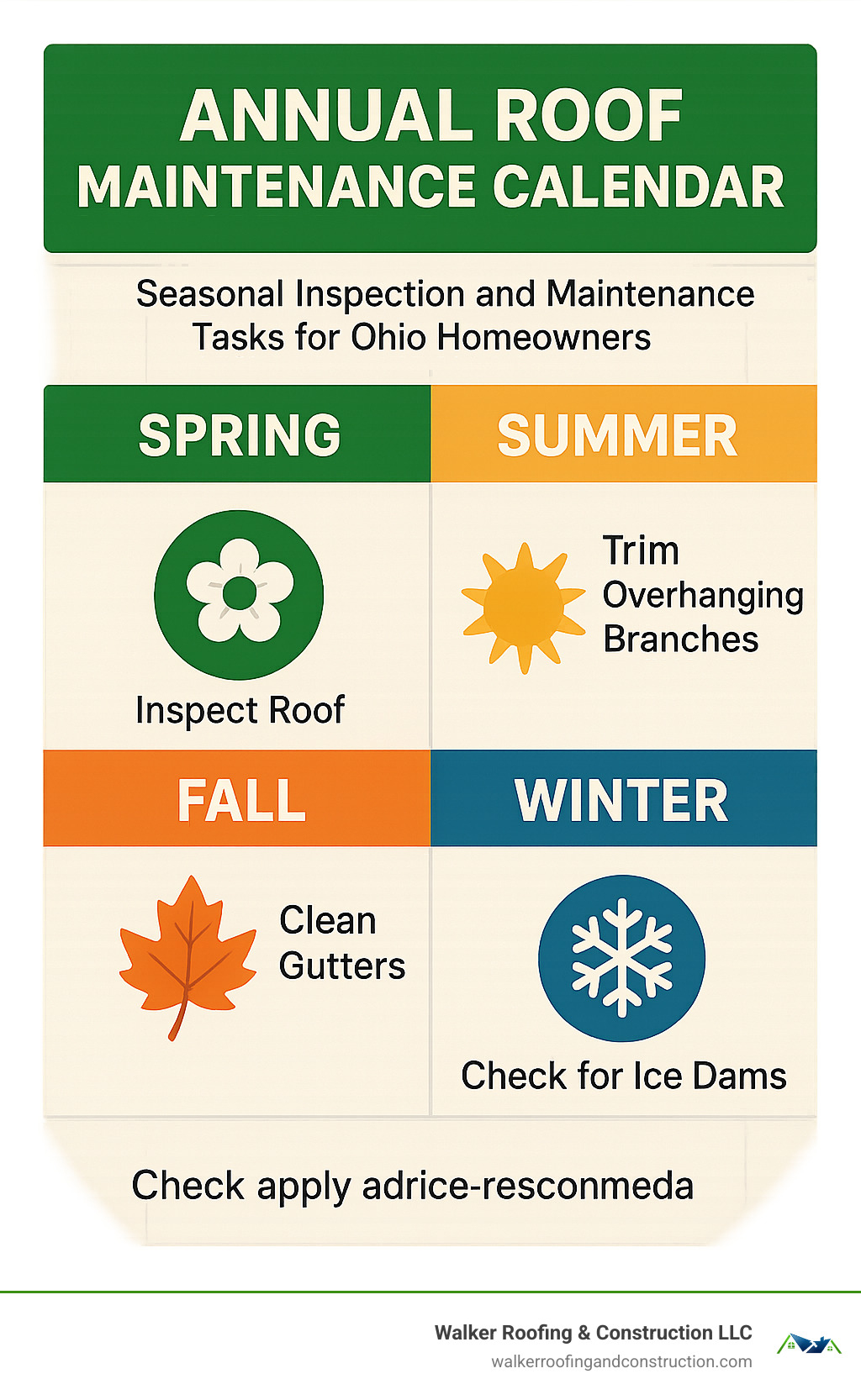
Think of your roof like your car—regular check-ups prevent breakdowns. Scheduling biannual roof inspections in spring and fall lets our professionals spot those small issues before they become midnight emergencies during the next big storm. These inspections typically pay for themselves many times over by extending your roof’s life by up to a decade.
Those gutters you’ve been meaning to clean? They’re actually your roof’s best friends. When they clog, water backs up under your shingles and creates those dreaded ice dams during Ohio winters. Similarly, those beautiful shade trees can turn into roof wreckers during high winds if you don’t trim overhanging branches regularly.
“I tell my customers that ignoring small roofing issues is like ignoring a small leak in your boat—eventually, you’re going swimming,” says one of our veteran roofers. Those missing shingles or tiny leaks might seem minor today, but they create vulnerable entry points when storms hit.
If you’re planning a roof replacement in the near future, consider investing in impact-resistant shingles. They cost a bit more upfront but provide superior protection against Ohio’s notorious hail and wind-blown debris. Proper flashing around chimneys and vents is another critical area where a little extra attention during installation prevents major headaches later.
Don’t overlook what’s happening under your roof either. Proper attic ventilation and insulation not only reduce your energy bills but also prevent ice dams and extend your roof’s lifespan by maintaining consistent temperatures.
But even with perfect maintenance, Mother Nature sometimes has other plans. When emergencies happen, that’s when our 24/7 emergency response team springs into action. With over two decades of experience weathering Ohio storms, we’ve seen it all—and fixed it all.
Our certified CertainTeed Master Shingle Installers don’t just patch the problem; they provide lasting solutions backed by our 10-year workmanship guarantee. And because dealing with insurance claims can be almost as stressful as the roof damage itself, we specialize in guiding homeowners through the entire claims process with minimal hassle.
For more information about maintaining your roof throughout the seasons, check out the National Roofing Contractors Association’s homeowner resources.
The difference between a minor repair and a major restoration often comes down to minutes, not days. When storm damage occurs, quick action prevents that initial water entry from cascading into structural damage, mold growth, and ruined possessions.
So before the next storm warning lights up your phone, take a moment to save our contact information. When high winds and driving rain are testing your roof’s limits, knowing you have Walker Roofing & Construction LLC’s expertise just a call away provides something even more valuable than roof repairs—peace of mind.
In Ohio’s unpredictable weather, it’s not a question of if your roof will face challenges, but when. With our preventative maintenance program and rapid emergency storm roof repair services, you and your home can weather any storm with confidence.